

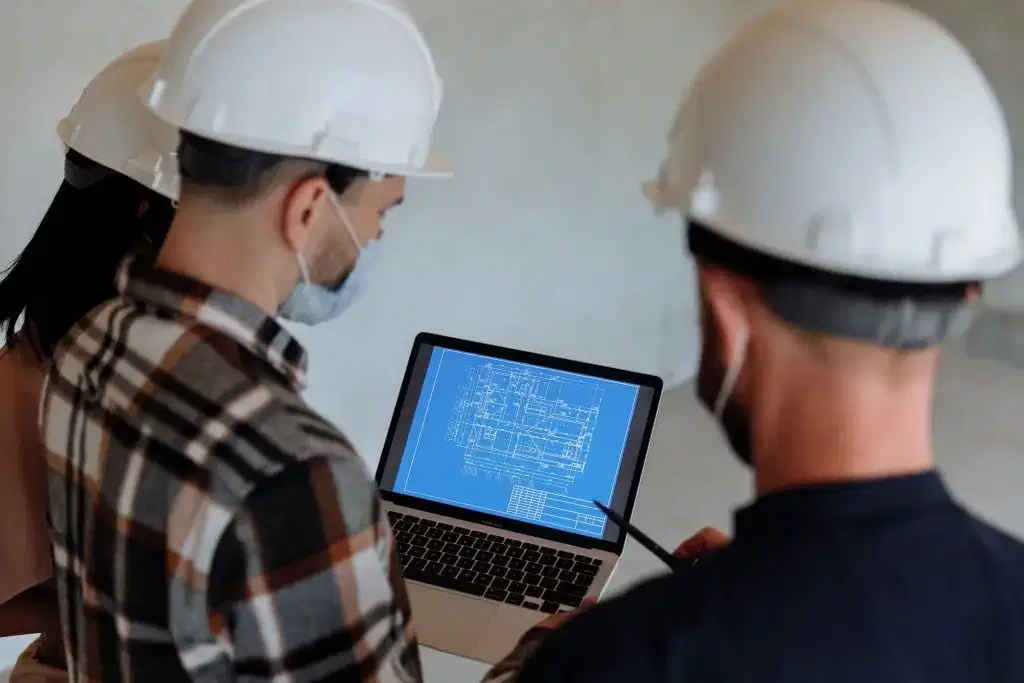
How Is AI Changing the Construction Industry?
Artificial intelligence (AI) is changing the construction industry, from how projects are planned and designed to how risks are identified and equipment is maintained.
While AI might sound like something from the future, construction businesses are already exploring ways to use artificial intelligence to improve efficiency, productivity, safety and decision-making.
But what does AI in construction actually look like – and what does it mean for the people working in the industry?
What Is AI in Construction?
Artificial intelligence is technology that can process large amounts of information, identify patterns and carry out tasks that would traditionally require human input.
In the construction industry, AI can be used alongside existing technologies such as Building Information Modelling (BIM), sensors, cameras and project management software.
Its purpose isn’t necessarily to replace people. Instead, AI can help construction professionals analyse information, identify potential problems and make better-informed decisions.
How Is AI Changing the Construction Industry?
AI has applications across many different areas of construction. Here are some of the ways it could change how the industry works.
1. Smarter Construction Project Planning
Construction projects involve huge amounts of information, including programmes, drawings, costs, labour requirements, materials and risk assessments.
AI can analyse large quantities of project data quickly, helping teams identify patterns and potential problems.
For example, AI could help construction businesses:
- Identify potential project delays
- Forecast labour and material requirements
- Highlight potential cost risks
- Analyse different project scenarios
- Improve programme planning
- Support decision-making
Better analysis could help project teams identify problems earlier rather than dealing with them once they have already affected the project.
However, AI is only as reliable as the information it is given. Good-quality data and experienced professionals are still essential.
2. Using AI to Improve Construction Health and Safety
Health and safety is another area where AI could have a major impact on construction.
AI-powered systems can analyse information from cameras, sensors and other connected devices to help identify potential hazards.
Depending on the technology being used, AI could help identify:
- People entering restricted areas
- Missing or incorrect PPE
- Unsafe working practices
- Plant and vehicle movements
- Changes in site conditions
- Potential conflicts between workers and machinery
This could provide site teams with another way to identify risks and take action.
However, AI should support – not replace – effective health and safety management.
Technology might identify that someone isn’t wearing the correct PPE, for example, but it cannot necessarily understand the circumstances behind it.
Competent people, effective supervision and appropriate training remain essential.
3. AI and Construction Design
AI is also changing how construction projects can be designed and assessed.
When used alongside technologies such as BIM, AI can help teams analyse designs, identify potential clashes and explore different options.
Identifying a problem during the design stage is generally preferable to discovering it once construction has already started.
AI could therefore help reduce:
- Rework
- Design clashes
- Delays
- Material waste
- Unnecessary costs
The earlier potential problems are identified, the more opportunity there is to resolve them before they affect the project.
4. Predictive Maintenance for Construction Equipment
AI can also be used to analyse information from construction equipment and machinery.
Traditional maintenance often relies on scheduled servicing or responding when equipment develops a fault.
Predictive maintenance takes a different approach by using data to identify potential signs of equipment failure before a breakdown occurs.
For construction businesses, this could help with:
- Reducing unexpected downtime
- Improving equipment availability
- Planning maintenance more effectively
- Reducing the impact of equipment failures
- Improving productivity
For larger construction projects using significant amounts of plant and equipment, this could provide valuable benefits.
5. Can AI Reduce Construction Waste?
Reducing construction waste is an important challenge for the industry.
AI can analyse project information to help businesses forecast material requirements and potentially reduce over-ordering.
Combined with digital design and planning tools, AI could also help teams understand how materials can be used more efficiently before work begins.
This could help reduce unnecessary waste while potentially saving businesses money.
6. How Will AI Affect Construction Jobs?
One of the biggest questions about artificial intelligence in construction is whether AI will replace workers.
The answer is unlikely to be that simple.
AI may automate some repetitive administrative tasks, but construction still relies heavily on practical skills, experience, judgement, communication and decision-making.
Instead of simply replacing jobs, AI is likely to change some construction roles and the skills people need to carry them out.
Workers may increasingly need to understand digital systems, interpret data and work alongside AI-supported technology.
This means training and skills development will become increasingly important as construction technology continues to evolve.
Does AI Replace Competence in Construction?
No.
AI can analyse information, identify patterns and make predictions, but it cannot replace the knowledge, skills, experience and judgement of a competent person.
The same applies to training.
Having a certificate does not automatically mean someone is competent. Similarly, having access to the latest technology does not guarantee that it will be used correctly.
As AI and other digital technologies become more common across construction, workers and businesses will need to make sure their skills keep pace with the changing industry.
This could include training in areas such as:
- Digital construction
- Artificial intelligence
- Data management
- Building Information Modelling (BIM)
- Digital safety systems
- Automated equipment
- New construction technologies
The most valuable professionals may increasingly be those who understand both the technology and the practical realities of construction.
What Does the Future of AI in Construction Look Like?
AI has the potential to transform many areas of the construction industry.
From smarter project planning and improved safety monitoring to predictive maintenance and waste reduction, artificial intelligence could help construction businesses work more efficiently and make better use of the information available to them.
But technology is only part of the picture.
AI doesn’t replace competent people. It gives competent people another tool to work with.
As the construction industry becomes increasingly digital, businesses will need to invest not only in new technology but also in the skills and knowledge needed to use it effectively.
The technology may be changing. The need for competent people isn’t.
Frequently Asked Questions About AI in Construction
How is AI used in the construction industry?
AI can be used in construction for project planning, risk identification, design analysis, predictive maintenance, resource management and waste reduction. Its applications are continuing to develop as construction businesses adopt new digital technologies.
What are the benefits of AI in construction?
Potential benefits of AI in construction include improved project planning, earlier identification of risks, better decision-making, increased productivity, reduced waste and more effective equipment maintenance.
Will AI replace construction workers?
AI is more likely to change some construction roles than replace the workforce entirely. Practical skills, experience, judgement and competence remain essential across the industry.
Why is training important as AI develops?
As construction technology changes, workers need the skills and knowledge to use new systems safely and effectively. Ongoing training can help businesses keep their workforce competent as the industry evolves.