

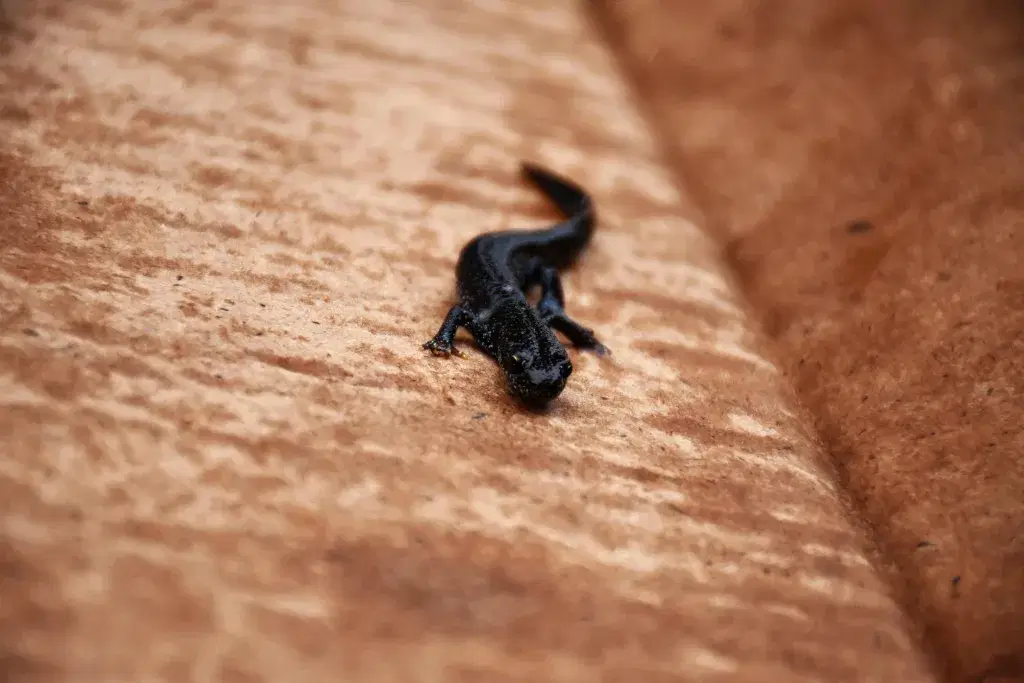
Great Crested Newts on Utility Sites: Understanding Environmental Risk and Compliance
If you’ve spent any time working on UK utility or infrastructure projects, you’ll know that one of the smallest species can cause the biggest conversations on site: the great crested newt (GCN).
I’ve lost count of the number of times I’ve been asked, “Why are they here?” especially on substations, gas compressor sites, and water treatment works. At first glance, these aren’t exactly nature reserves. But scratch beneath the surface, and it starts to make sense.
For those involved in construction, maintenance and infrastructure projects, great crested newts are a classic example of the ecological constraints that can affect project delivery. Understanding why they are present and what legal protections apply is an important part of effective environmental risk management.
A Quick Introduction to the Great Crested Newt
The great crested newt (Triturus cristatus) is one of the UK’s most protected species. Due to historic habitat loss and fragmentation, they are now protected under:
- The Wildlife and Countryside Act 1981 (as amended)
- The Conservation of Habitats and Species Regulations 2017 (as amended)
This protection isn’t light touch. It’s strict, and it applies to:
- Killing, injuring, or capturing newts
- Damaging or destroying breeding sites or resting places
- Obstructing access to habitats
- Possessing or transporting them without a licence
Let’s Be Clear on the Consequences
This isn’t just a “tell-off from the ecologist” situation.
If great crested newts are harmed or their habitat is damaged without appropriate licensing:
- You can face unlimited fines
- Up to 6 months imprisonment per offence
- Each individual newt affected can count as a separate offence
- Companies as well as individuals can be prosecuted
I always say this in training: this isn’t about scaring people-it’s about understanding the real risk. Because a lack of environmental awareness on site can quickly become a legal and compliance issue.
Why Utility Sites Are Perfect Newt Real Estate
So why are they showing up on our sites?
1. Water + Shelter = Ideal Conditions
Newts need:
- Water bodies for breeding
- Safe terrestrial habitat for the rest of the year
And utility sites often deliver:
- Balancing ponds and lagoons
- Drainage ditches
- Damp, undisturbed corners
- Storage areas with cover
Water treatment works, in particular, are almost tailor-made environments for great crested newts and other wildlife.
2. Restricted Access = Low Disturbance
Substations and compressor sites are:
- Secure
- Fenced
- Access-controlled
From an ecological perspective, that’s prime habitat with minimal human disturbance over long periods.
3. The Value of “Untidy” Areas
Those corners of site that don’t look picture-perfect?
- Rough grassland
- Scrub
- Log piles
- Redundant materials
They’re ideal for:
- Foraging
- Shelter
- Overwintering
We often unintentionally create the very habitats these protected species need.
4. Stability Over Time
Unlike farmland or development land, these sites:
- Don’t change significantly year-on-year
- Avoid large-scale ground disturbance
- Provide consistent environmental conditions
That stability is hugely attractive to protected species and contributes to local biodiversity.
Great Crested Newts Are a Classic Environmental Constrain
Great crested newts are one of the most commonly encountered ecological constraints on UK construction and utility projects. Alongside nesting birds, bats and other protected species, they demonstrate why environmental compliance and early planning are essential.
In many cases, the issue isn’t the species itself—it’s discovering the constraint too late.
We recently explored a similar challenge involving peregrine falcons and SR215 guidance, where exclusion zones can have a significant impact on project planning and delivery. Both examples highlight the importance of understanding protected species requirements before work begins, rather than reacting once a programme has already been affected.
Whether it’s great crested newts, peregrine falcons, bats or nesting birds, the principle remains the same: identify environmental risks early and manage them proactively.
What This Means in Practice
Here’s where it matters for site teams.
If you’re working in these environments, whether it’s maintenance, upgrades, or construction, there’s a real likelihood of encountering ecological constraints.
And the key point is this:
It’s not the presence of newts that causes problems—it’s the lack of awareness around them.
Because:
- Works stopping mid-programme
- Emergency ecological surveys
- Licensing delays
- Increased costs
- Legal risk
all come from reacting too late.
The Role of CITB SEATS Training
This is exactly why CITB SEATS (Site Environmental Awareness Training Scheme) is so important for supervisors, managers and anyone responsible for environmental compliance on construction and utility sites.
It gives site teams practical understanding of:
- Environmental responsibilities
- Protected species risks
- Environmental legislation
- Legal frameworks (like those covering great crested newts)
- How to identify issues early
- Good environmental site management practices
You don’t need to become an ecologist—but you do need to know when to pause, ask questions, and escalate.
When teams are SEATS-trained, the conversation changes from:
- “We’ve got a problem”
to
- “We’ve planned for this.”
That shift in mindset can make a significant difference to project outcomes.
A Pragmatic Approach to Environmental Risk
At Pragmatic Consulting, this is where we sit between environmental compliance and real-world project delivery.
Because let’s be honest:
- Projects have deadlines
- Clients have expectations
- Sites need to keep moving
Our role is to help teams:
- Understand environmental legislation without overcomplicating it
- Translate ecological constraints into practical actions
- Identify risks early—not when the excavator is already on site
- Support environmental compliance across construction and infrastructure projects
- Keep projects compliant and moving
It’s not about stopping work. It’s about doing it properly.
Final Thoughts
Great crested newts aren’t appearing on substations and treatment works by accident.
They’re there because we’ve created:
- Secure environments
- Stable environments
- Resource-rich habitats
Understanding that shifts the mindset from frustration to proactive management.
When you combine:
- Environmental awareness
- Early identification of ecological constraints
- Practical guidance
- CITB SEATS training
you move from risk and delay to control and confidence.
Because once you understand the why, you’re in a much better position to manage the what next without it turning into a legal, environmental, or programme issue.
And ultimately, that’s what good environmental management is all about: protecting biodiversity, maintaining compliance, and keeping projects moving safely and efficiently.