

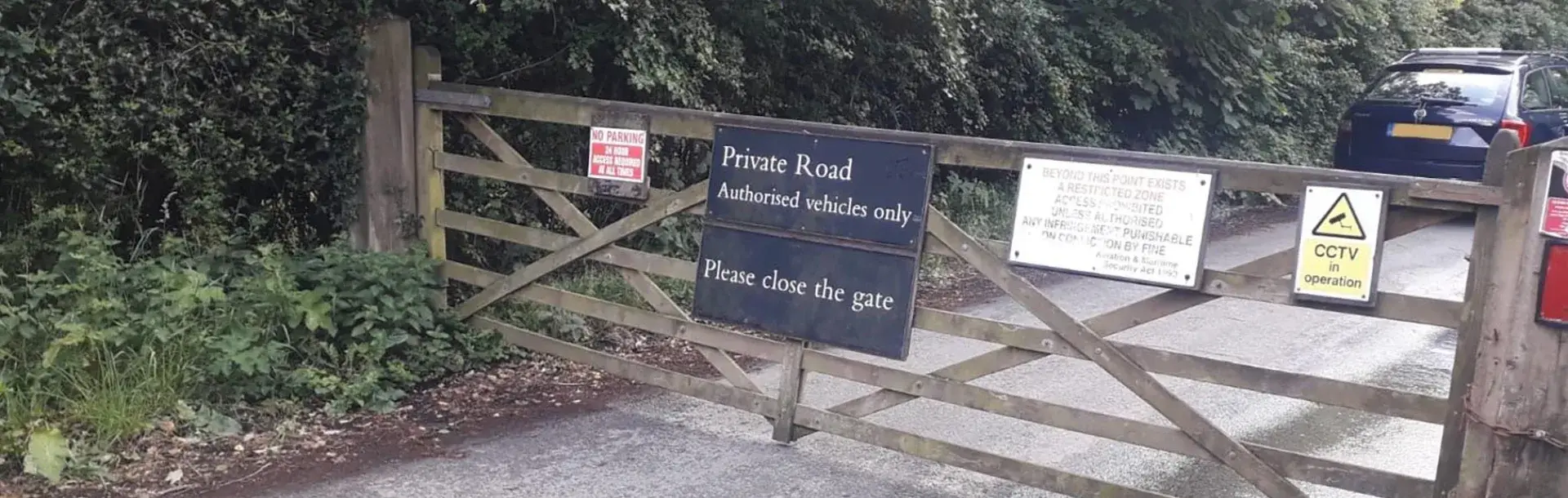
Works on Private Roads or Estates – Know Your Rights and Responsibilities
Private roads and estates often offer a quieter, more exclusive living environment. But when it comes to carrying out maintenance, improvements, or construction, the legal responsibilities can be more complex than you might think.
What Is a Private Road or Estate?
A private road is not maintained by the local authority. Instead, its maintenance responsibility lies with homeowners, the developer, or a management company.
A private estate may include roads, paths, green spaces, and communal infrastructure that are also not adopted by the local council.
How Do I Know Who Owns the Land?
To determine ownership:
- Check your Title Deeds or consult the Land Registry
- Contact your Residents’ Association or Management Company
- In some cases, ownership is shared among property owners
If I Am the Owner, Can I Carry Out Works?
Generally, yes — but you must:
- Comply with local planning laws and safety regulations
- Notify or gain consent from neighbours or relevant stakeholders
What If I Only Part-Own the Land?
If ownership is shared:
- You may need written consent from all other owners for significant works
- Even minor upgrades (e.g. resurfacing, signage) may require majority or unanimous agreement
What If I Don’t Own the Land But Have Been Asked to Do the Work?
You cannot carry out works without:
- Written permission from the landowner or managing body
- Clear legal authority—verbal agreements are not sufficient
Carrying out unauthorised work can lead to legal disputes, especially if access is disrupted or damage occurs.
Do I Need Planning Permission?
Yes, in some cases. Especially if the work:
- Affects drainage, access, or visibility
- Involves adding structures like bollards, gates, or lighting
- Is in a conservation area or protected zone
Always consult your local planning authority before beginning any work.
What If I Have Access Rights (Easements)?
An easement grants you the right to use a road, but not to alter or carry out works on it.
Doing so without ownership or consent could result in legal action from other right holders or landowners.
Could a financial claim be lodged against me if I just go ahead and carry out the works?
Yes. Carrying out unapproved works could expose you to:
- Financial liability for damages or injuries
- Legal claims by other owners or users
- Insurance issues if your actions are not covered
Always ensure your contractors are:
- Properly insured
- Competent (ideally NRSWA qualified)
- Aware of health & safety obligations
Even with permission, be prepared for resistance or objections from neighbours or other users of the road. Good communication can prevent disputes.
Final Advice
If you’re planning to do work on a private road or estate:
- Confirm ownership and your legal rights
- Obtain written permissions where required
- Understand your planning obligations
- Prioritise safety, communication, and professional standards
When in doubt: consult legal or planning professionals to avoid expensive mistakes.
If you are interested in Streetworks courses, find out more here.