

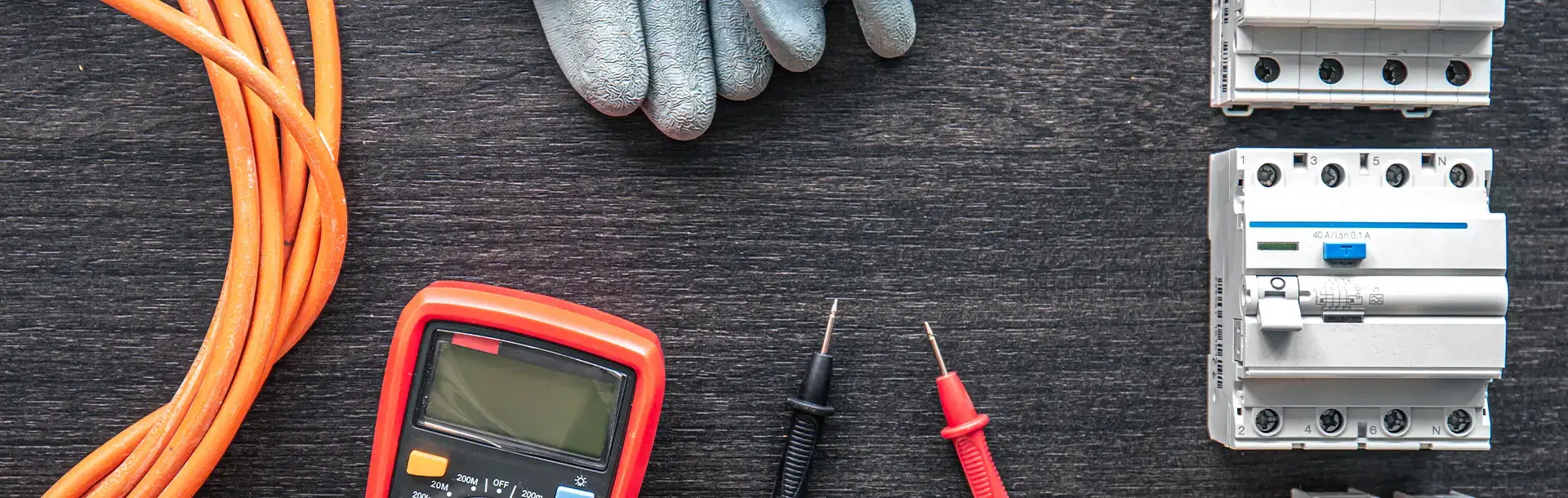
Understanding the Different Types of RCDs: Choosing the Right Device for the Right Application
Why RCD Selection Matters
Residual Current Devices (RCDs) have become one of the most important electrical safety devices used within modern electrical installations. Their primary purpose is to reduce the risk of electric shock and minimise the likelihood of electrical fires by disconnecting the supply when earth leakage currents are detected.
As electrical installations have evolved, so too have the types of equipment connected to them. Modern appliances often contain electronic components, variable speed drives, inverters and power conversion technology that can produce different forms of residual current.
As a result, selecting the correct type of RCD is no longer simply a matter of choosing a device with the correct current rating and tripping sensitivity. Electricians must also consider the nature of the residual currents that may be present within the installation.
This article explores the various types of RCD recognised by BS 7671 and explains where each type should be used.
What is an RCD?
An RCD continuously monitors the current flowing in the live conductors of a circuit.
Under normal operating conditions:
- Current flowing out equals current returning.
- The magnetic fields within the RCD balance each other.
If a fault occurs and current flows to earth:
- The outgoing and returning currents become unequal.
- The imbalance is detected.
- The RCD disconnects the supply.
This rapid disconnection can significantly reduce the risk of electric shock and fire.
Two main types of RCD are recognised within BS 7671; an RCCB which operates as above as a straight-forward earth-leakage device and an RCBO which combines the above functions alongside the features of a circuit-breaker, providing both earth leakage and overcurrent detection in the same device. For the purposes of this article, we are excluding the overcurrent features of an RCBO.
Type AC RCD
Type AC devices are designed to detect alternating sinusoidal residual currents only.
Historically, Type AC RCDs were widely installed in domestic, commercial and industrial installations. However, modern electrical equipment increasingly contains electronic circuitry capable of producing pulsating DC currents. These currents may cause ‘blinding’ of the RCD resulting in a hazardous non-operation situation.
Typical Applications
- Incandescent lighting
- Resistive heating
- Simple fixed appliances
- Traditional electric showers
Type AC RCDs are generally considered unsuitable for many modern electronic loads where DC may be present and as a result, their use in new installations has become increasingly limited by BS 7671, which specifies that they shall only be used for fixed equipment where no DC currents are present.
Type A RCD
Type A devices can detect:
- Alternating sinusoidal residual currents
- Pulsating DC residual currents
This makes them suitable for many modern appliances containing electronic components, and can typically serve as a direct replacement for a Type AC device.
Typical Applications
- Washing machines
- Dishwashers
- Induction hobs
- LED lighting systems
- Computer equipment
- Single-phase inverter equipment
Type A RCDs are now widely regarded as the minimum practical standard for many modern installations.
Many domestic appliances contain rectifiers and electronic power supplies that can generate pulsating DC leakage currents.
A Type AC device may not operate correctly under these conditions, whereas a Type A device is specifically designed to do so.
Type F RCD
Type F devices provide additional protection where equipment generates more complex residual current waveforms. They can detect:
- AC residual currents
- Pulsating DC residual currents
- Mixed-frequency residual currents
Type F devices are particularly suited to single-phase inverter-driven equipment.
Typical Applications
- Air conditioning units
- Heat pumps
- Variable speed drives
- Modern refrigeration equipment
- High-efficiency washing machines
As inverter technology becomes increasingly common, Type F devices are becoming more widely used.
Type B RCD
Type B devices provide the highest level of residual current detection. They can detect:
- AC residual currents
- Pulsating DC residual currents
- Smooth DC residual currents
- High-frequency residual currents
Type B RCDs are specifically designed for installations where smooth DC leakage currents may occur.
Typical Applications
- Three-phase variable speed drives
- Solar photovoltaic (PV) power supply systems
- Battery electrical energy storage systems (EESS)
- Electric vehicle (EV) charging installations (where alternative measures are not provided)
- Industrial inverter systems
Smooth DC currents can effectively blind certain other RCD types, preventing them from operating correctly. Type B devices are designed to continue functioning even when these currents are present.
Selecting the Correct RCD
The choice of RCD should always be based on:
- The characteristics of connected equipment;
- Manufacturers’ instructions;
- BS 7671 requirements;
- Risk-based assessment; and
- Particular electrical installation design considerations.
Simply selecting the cheapest device ‘off the shelf’ may result in inadequate protection.
RCD Selectivity and Coordination
Where multiple RCDs are installed, consideration should be given to selectivity (previously referred to as ‘discrimination’ within BS 7671). In general:
- Type AC should not be installed upstream of Type A, F or B devices.
- Type A should not be installed upstream of Type F or B devices.
- Type F should not be installed upstream of Type B devices.
Incorrect selection can result in nuisance tripping or failure to operate correctly during fault conditions. The hierarchy is therefore:
Type AC → Type A → Type F → Type B
Moving from left to right represents increasing capability to detect more complex residual current waveforms.
RCDs and Fire Protection
Although RCDs are often associated with shock protection, they also play an important role in fire prevention. Earth leakage currents can cause:
- Localised overheating
- Arcing
- Insulation damage
- Ignition of surrounding materials
By disconnecting circuits before dangerous conditions develop, RCDs can significantly reduce fire risks.
Future Developments
The growth of renewable energy systems, battery storage and electric vehicle (EV) charging infrastructure is driving increased demand for advanced RCD technologies. As electrical installations become more reliant on power electronics, electricians will need an increasingly thorough understanding of RCD types and their applications.
Interested in more Electrical related reading? You might be interested in our related blogs:
Navigating the Appendices of BS 7671: More Than Just Extra Pages