

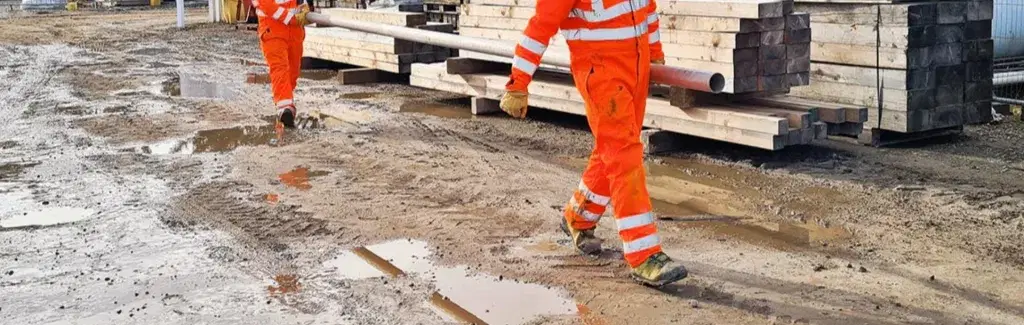
Top 5 Manual Handling Techniques Every Site Worker Should Know
In construction and utilities, manual handling is part of everyday life. Whether it’s lifting equipment, moving materials, or positioning pipes, the risks of injury are high if tasks aren’t carried out safely. In fact, manual handling remains one of the leading causes of workplace injuries in the UK, with thousands of workers suffering from back pain, strains, and long-term musculoskeletal disorders each year.
The good news? Many of these injuries are preventable with the right approach and training. Here are the top five manual handling techniques every site worker should know.
1. Assess Before You Lift
Before moving anything, stop and think. Ask yourself:
- How heavy is it?
- Do I need help or mechanical equipment?
- Is the path clear and stable?
Planning ahead reduces the risk of unexpected strain or slips.
2. Get Into the Right Position
Always stand close to the load with your feet shoulder-width apart. Bend at the hips and knees — not your back — and keep your posture stable.
A strong, balanced stance gives you more control and prevents twisting or awkward movements.
3. Use Your Legs, Not Your Back
When lifting, keep the load close to your body and straighten your legs to lift smoothly. Avoid jerking movements, they put unnecessary strain on muscles and joints.
Your legs are stronger than your back, let them do the work.
4. Keep the Load Close and Stable
The further the load is from your body, the more pressure it puts on your spine. Keep it as close as possible to your torso and avoid leaning forward while carrying.
If you need to turn, pivot your feet, don’t twist your back.
5. Know When to Get Help
No matter how skilled you are, some loads are simply too heavy or awkward to handle alone. Using trolleys, hoists, or asking a colleague to help is a sign of good practice, not weakness.
Teamwork and the right tools save time and prevent injury.
Why Training Matters
Even experienced site workers can develop bad habits over time. That’s why formal training is essential, it reinforces safe techniques and helps identify risks that workers might overlook.
At Pragmatic Consulting, we deliver accredited Manual Handling training suitable for all types of businesses. With a mix of theory and hands-on practice, our courses ensure workers stay safe, compliant, and productive.
Explore our training options:
Or drop us an email to ask for dates for a closed course for your team support@pragmatic-consulting.co.uk.
Final Word
Safe manual handling isn’t just about ticking compliance boxes; it’s about protecting people, reducing downtime, and building healthier worksites. By following these five techniques and refreshing skills with training, workers can lift smarter, safer, and stronger.
You might also be interested in:
Essential Training Courses for Construction Workers in the UK