

(The Evo Genie Lesson with UK Safety Context)
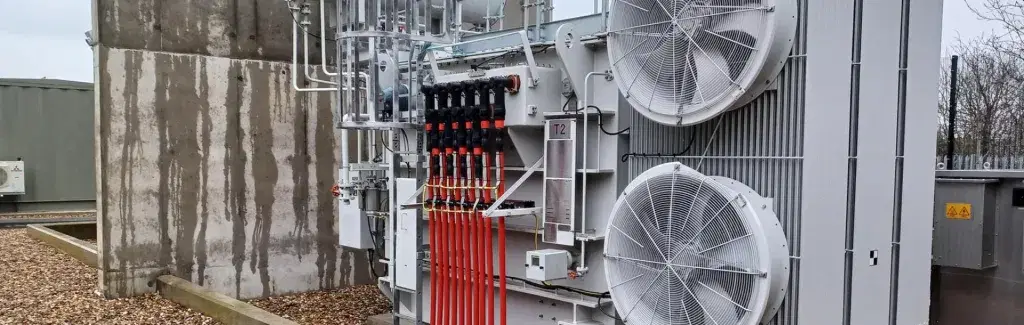
If you’ve spent even five minutes in a primary substation (11kV or 33kV), you’ll recognise the moment. That brief, heavy silence just before a bus section is energised for the first time. It’s the sound of every engineer in the room holding their breath.
Whether you’re applying 11kV, 33kV, or 132kV to brand‑new plant or re‑energising equipment after a major overhaul this is the most hazardous point of the job. As we often say at Pragmatic Consulting, “first‑time energisation is when the invisible mistakes reveal themselves”.
And if you’re standing directly in front of the circuit breaker when you press Close, you’re effectively betting your life that no one has left a spanner on the busbars.
1. Why We Operate Remotely: The Safety Logic (UK Context)
The energy involved in a primary substation is immense. If a circuit breaker closes into a dead short perhaps due to a forgotten Circuit Main Earth (CME) or a latent defect the resulting arc flash is, in UK legal terms, an uncontrolled release of electrical energy.
Legal duty to prevent danger
UK law does not treat this as an acceptable risk:
- Health and Safety at Work etc. Act 1974 (HSWA) places a duty on employers and duty holders to protect employees and others from foreseeable harm—including catastrophic equipment failure.
- Electricity at Work Regulations 1989 (EAW) requires electrical systems to be constructed, maintained, and operated to prevent danger so far as is reasonably practicable (Reg. 4). Arc flash and explosive failure are explicitly recognised hazards under EAW.
- The Electricity Safety, Quality and Continuity Regulations 2002 (ESQCR) (Reg 11) requires that safety measures are required for electrical substations to protect both workers and the public. This also includes the construction, operation, safe access and maintenance of equipment to protect all.
Standing in front of a breaker during first energisation would be near on impossible to justify in a court of law and show a solid defence against the duties in the above legislation.
Personnel safety and blast zones
HSE guidance on switchgear safety makes it clear that switchgear failure can cause death or serious injury, and that operational controls and not just PPE are required to manage these risks.
DNO Safety Rules (Northern Power Grid (NPG), Scottish and Southern Electricity Networks (SSEN), SP Energy Networks (SPEN), UK Power Networks (UKPN) Western Power Distribution (now National Grid Electricity Distribution)).
reflect this by requiring:
- Controlled access
- Defined exclusion zones
- Remote or automated operation where practicable during high‑risk switching
This is not “belt and braces” it is how UK duty holders demonstrate compliance with HSWA, EAW and ESQCR.
The “umbilical”
Where full Supervisory Control and Data Acquisition (SCADA) is unavailable, the use of a remote operating umbilical aligns with:
- HSE guidance on reducing exposure to switchgear failure hazards
- National Grid Electricity Transmission principles for remotely controlled equipment are included in (NSI‑14)
Remote operation is therefore a recognised engineering control, not an informal workaround.
2. The Evo Genie Incident: A UKPN Warning
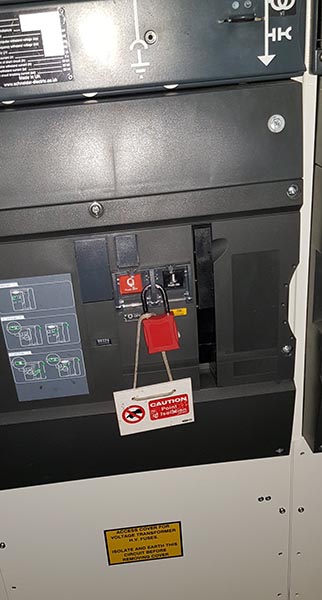
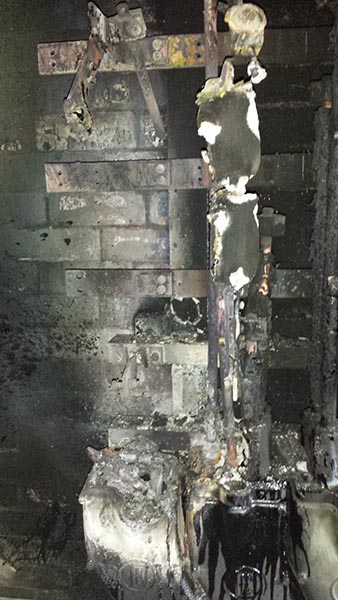
UK Power Networks issued a safety alert following a catastrophic failure of an Evo Genie circuit breaker during a switching operation. The investigation identified mechanical stresses during closing combined with a latent defect, resulting in an explosive failure of the breaker enclosure.
The critical point is that the engineers involved were operating the breaker remotely, in line with UKPN Distribution Safety Rules.
Because they were not positioned in front of the equipment, the event remained a plant failure, not a fatal accident.
This is exactly what UK safety law expects:
- The hazard was foreseeable
- Exposure was minimised
- The risk was reduced so far as reasonably practicable
That is textbook EAW compliance. Please note the investigation results have not yet been issued.
3. Pre‑Energisation: The Point of No Return (Audit‑Defensible)
Before issuing any close command, remote or otherwise you must be able to demonstrate a safe system of work, as required by EAWR and the ENA Model Distribution Safety Rules.
Key checks include:
- Verification of isolations
Isolators must be fully home and positively indicated – no transit conditions. - Removal of earths
Forgotten earths remain a leading cause of energisation failures. EAW requires danger to be prevented, not reacted to. CME must be removed, logged, and physically accounted for. - Protection functional checks
Trip Circuit Supervision must be healthy. HSE guidance highlights that failure of protection systems significantly increases injury risk during switchgear faults. - Mechanism charging and condition
HSG230 specifically highlights overstressed or poorly maintained operating mechanisms as a precursor to switchgear failure.
4. Protection Relay Logic: Your Legal Safety Net
UK practice recognises that first energisation is an abnormal operation.
Using maintenance or commissioning settings aligns with:
- EAW requirements to prevent danger
- ENA Model Distribution Safety Rules or the DNO or IDNO Safety Rules for the asset being commissioned
- HSE expectations for fault energy reduction
Key principles:
- Reduced time delays
- Active busbar differential protection
- Lock‑out relays that prevent re‑closure without investigation
Resetting a lock‑out without understanding the cause is extremely difficult to justify under EAW.
5. The Switching Sequence (Good UK Practice)
- Clear the area
Confirm exclusion zones are clear—consistent with DNO Safety Rules and HASAWA duties. - Confirm remote control integrity
SCADA or umbilical control verified healthy, in line with National Grid NSI‑14 principles. - Issue the close command
- Soak test
Leaving the busbar energised without load allows early detection of insulation or PD issues, consistent with HSE switchgear guidance.
6. Training and Competency
UK safety law is explicit: competence matters.
- HASAWA and EAWR both require that work on electrical systems is carried out by competent persons
- ENA, DNO and IDNO Safety Rules reinforce this through authorisation systems (SAP, AP, CP)
At Pragmatic Consulting, we don’t just teach which buttons to press, we teach you why UK law and safety rules demand those controls.
The Evo Genie failure proves the point: even modern, compliant equipment can fail. Remote operation is not optional; it is one of the most effective ways to meet your legal duty to prevent danger.
Relevant Training: Building Competence in Substation Safety and High-Risk Operations
Understanding the risks associated with first-time energisation and the importance of remote operation of circuit breakers is only part of the equation. Demonstrating competence, and being able to apply these principles in real-world environments, is what ultimately ensures compliance and keeps people safe.
At Pragmatic Consulting Ltd, our training is designed to reflect the realities of working on or near high-voltage systems, combining technical knowledge with practical application.
The following courses are directly relevant to the risks and controls discussed in this article:
Substation Access & Safety (BESC AME Substation)
For individuals working on or near operational substations, this course provides the foundational competence required for safe access, movement, and egress within high-voltage environments.
https://www.pragmatic-consulting.co.uk/course/eusr-besc-ame-substation/
Electrical Safety Compliance (ESQCR)
Designed for those responsible for ensuring compliance with UK electrical safety legislation, including the safe construction, operation, and maintenance of electrical systems.
https://www.pragmatic-consulting.co.uk/course/esqcr/
Impressed Voltage Awareness (EUSR)
Ideal for operatives and supervisors, this course builds awareness of induced and impressed voltage risks commonly encountered in substations and along transmission systems.
https://www.pragmatic-consulting.co.uk/course/eusr-impressed-voltage-awareness
Impressed Voltage for Designers
Focused on those involved in design and planning, this course ensures that impressed voltage risks are identified and mitigated at the earliest stage of a project lifecycle.
https://www.pragmatic-consulting.co.uk/course/impressed-voltage-for-designers
Impressed Voltage for Managers (EUSR)
Supports managers and supervisors in understanding their responsibilities when planning and overseeing work near high-voltage systems, including risk control and compliance.
https://www.pragmatic-consulting.co.uk/course/eusr-impressed-voltage-for-managers
Impressed Voltage for Managers (ECP/EAP Training)
Advanced training aligned to National Grid requirements, supporting those responsible for authorising and managing high-risk electrical operations.
https://www.pragmatic-consulting.co.uk/course/eusr-impressed-voltage-for-managers-ecp-eap/
Final Thought
Remote operation, exclusion zones, and protection systems all play a role, but they rely on one critical factor: competent people applying them correctly.
Training is how duty holders move from understanding risk to demonstrating control, which is ultimately what UK safety law requires.