

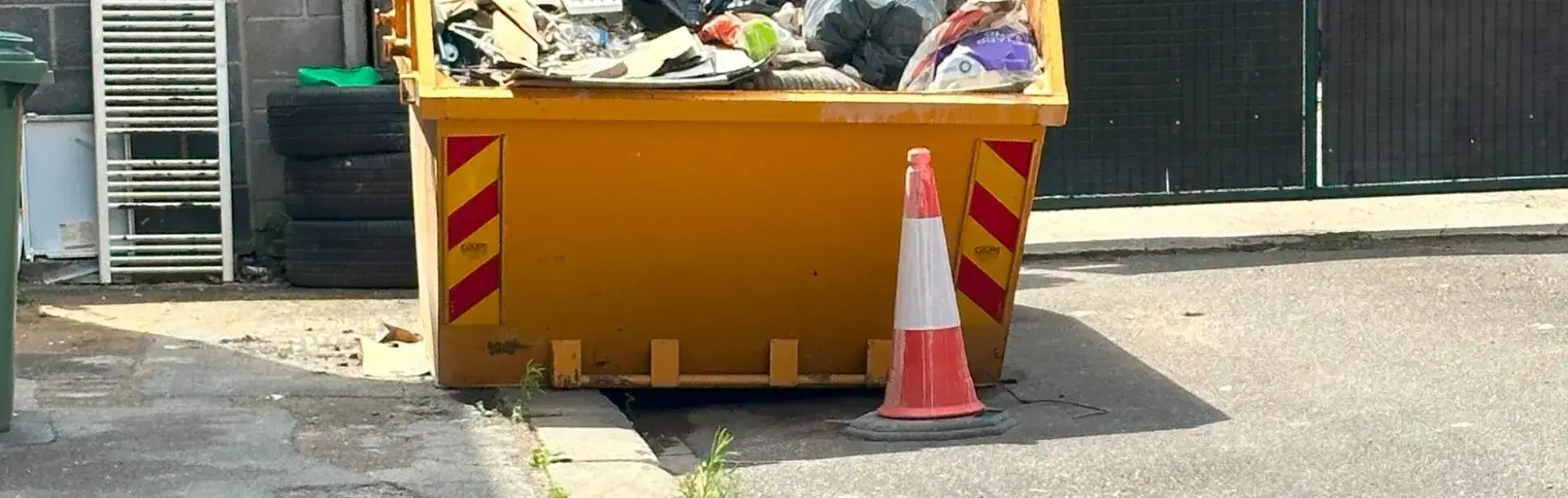
Storing Materials on the Public Highway – What You Need to Know
If you’re planning private works that require storing materials on the road or pavement (also known as the carriageway or footway), you must get approval from your local authority in advance.
This includes not only materials, but also skips, scaffolding, and any other equipment occupying public space.
Do You Need a Permit?
Yes. Materials for private construction or maintenance cannot be stored on the highway without a valid permit. You may also require:
- A Temporary Traffic Regulation Order (TTRO)
- A Scaffolding or Skip Licence, depending on what’s being placed
- Approval for footway or carriageway closures
Public Safety Comes First
Anything placed on a public highway must be:
- Properly signed and guarded to prevent injury
- Compliant with NRSWA O1 qualifications (for signing, lighting & guarding)
- Monitored to ensure public access is maintained or safely redirected
What About Pedestrian Access?
If the footway is blocked, you are responsible for:
- Providing a safe alternative pedestrian route
- Accommodating wheelchair users, pushchairs, and people with disabilities
- Ensuring this diversion doesn’t compromise road space for cars, cyclists, and horse riders
Restoring the Highway After Work
Once your work is complete:
- The highway must be restored to its original condition
- Failure to do so can result in fines or enforcement action for leaving it unsafe
In short: If you’re planning to store materials or equipment on the public highway—even temporarily—ensure you’re legally compliant, fully permitted, and prioritising safety for all road users.
If you are interested in Streetworks courses, find out more here.