

The Importance of Regular Inspection in Temporary Works Safety
What are Temporary Works?
In the construction sector, temporary works are key to the building of permanent structures in that they provide access, support and protection, and enable work on the permanent fixture to proceed-which would not otherwise be possible.
Temporary works are also crucial to a project’s safety, success and stability and so require proper design, planning and management.
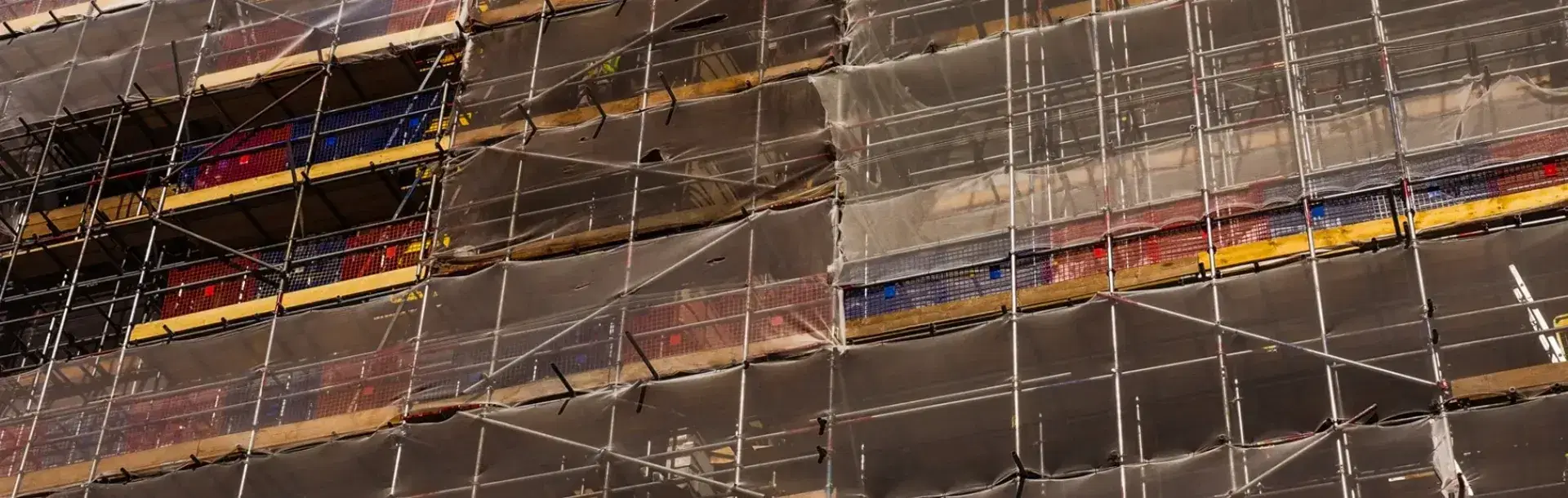
Examples of these engineered solutions include scaffolding, excavation support, short-term bridges and access roads. Also on the list are formwork (which temporarily holds concrete in place until it is strong enough to support itself; shoring, which uses temporary supports to stabilise a building, and falsework-temporary structures which support a permanent one until it can be self-supporting.
And the law says these works must be able to withstand any foreseeable loads they may need to bear, and stresses that they should only be used for the purposes for which they are intended.
What Does the Law Say About Inspections?
In the UK, there is no particular legislation governing the frequency of inspections of temporary works, and indeed this will depend on the type of works involved, how complicated they are and the potential hazards.
But the Health and Safety Executive (HSE) says these works must be regularly inspected by a competent person.
So Why are Regular Inspections for Temporary Works Important?
These solutions really matter for a number of reasons, including:
- Accident prevention: Incorrect design, installation or maintenance can lead to the failure of a temporary structure. With proper inspection, you identify possible issues like damage or corrosion, at an early stage. This gives you time to put things right before anything goes badly wrong.
- Regulatory compliance: Temporary works have to meet certain strict safety criteria and standards, and regular inspection helps with this and avoids hefty fines or other penalties. (An example is British Standard BS 5975-1:2024, which outlines procedures for managing temporary works.)
- Protection of passers-by and workers: Risk reduction makes the site safer for everyone and reduces the risk of nasty accidents.
- Preserving structural integrity: Works’ ability to withstand particular loads and conditions can change over time, for a number of reasons, from weather to construction activities. With frequent inspection, you find and can resolve any issues early on, so that works stay structurally sound and able to support loads as intended.
- Meeting deadlines and budgets: If works stay in a good condition, projects will run on time and to budget.
Temporary Works Training From Pragmatic Consulting
A Temporary Works Coordinator (TWC) plays a key role in managing temporary works, by preparing and checking designs and ensuring correct construction of these works takes place. The TWC should be able to halt work should it not be up to standard.
At Pragmatic Consulting, we offer two-day online TWC training courses, plus a one-day online course for temporary works supervisors.
Read more about the differences between temporary works co-ordinators and temporary works supervisors in our blog- Temporary works coordinators and supervisors- what are the key differences between these roles?
As always with us, you can look forward to high-quality training solutions uniquely tailored to the construction and utilities sectors.
If you have a query or want to book training for six or more, call us on 01926 674340 or email support@pragmatic-consulting.co.uk