

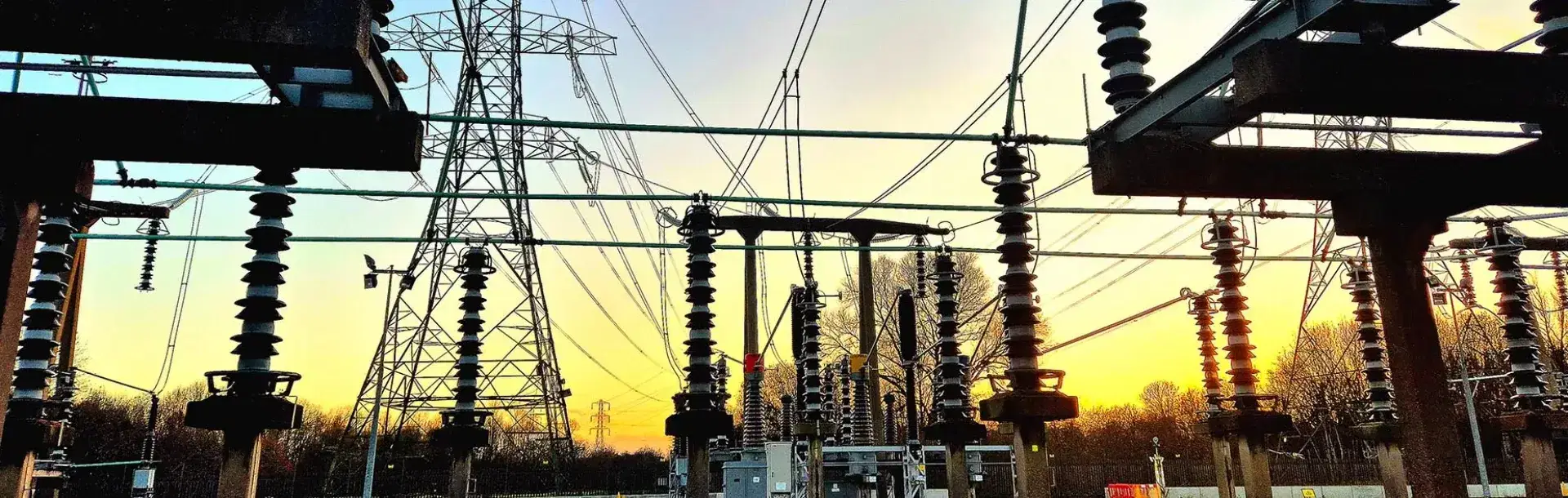
A Simple Guide to Impressed Voltage in High Voltage Substations
High voltage substations play an essential role in the transmission and distribution of electricity, ensuring that power reaches homes and businesses safely. However, working in these environments comes with inherent risks, particularly related to impressed voltage. Understanding what impressed voltage is and how it can affect workers is crucial for maintaining safety protocols in such high-risk areas.
What is Impressed Voltage?
Impressed voltage refers to a potentially dangerous voltage that appears on normally non- energised metalwork or other conductive materials near live high-voltage equipment, caused by electromagnetic fields from the adjacent live circuits ,inducing a charge through capacitive, inductive or conductive coupling even though it may be disconnected from the rest of the system.
This voltage can occur even in insulated areas because of capacitive coupling, where an electrical charge is induced in a conductor by a nearby charged conductor without direct contact.
For workers in a high voltage substation, this means that any unearthed conductive materials, whether they be scaffolding, tools, wooden ladders, welfare cabins, heras fencing, plant, machinery, etc, can potentially accumulate a certain voltage level.
What are the risks associated with Impressed Voltage?
One of the main dangers associated with impressed voltage is the risk of electric shock. Even if an individual is not directly interacting with energised parts, the presence of impressed voltage can lead to unexpected and hazardous situations. High voltage overhead lines and substation equipment can induce voltages on nearby conductive surfaces, creating pathways for electric current that can be harmful or even fatal.
It is also important to recognise that the level of impressed voltage can vary depending on several factors. These include the live operating voltage, amount of current flow and the distance from the energised components, including the type of insulation used, and environmental conditions such as humidity.
Consequently, workers may not always be aware of the risk levels they encounter, underscoring the need for constant vigilance and adherence to safety protocols.
This is why contractors when undertaking construction works undertake things like Earthing Surveys, Impressed Voltage Surveys and create Impressed Voltage Management Procedures and site-specific Impressed Voltage Management Plans.
What are some of the Safety Measures to Mitigate Impressed Voltage Risks?
- Always ensure proper Grounding Techniques are used such as all structures etc being earthed and all plant, machinery etc having appropriate earthing such as Field Equipment Earths, earth tape etc as these help dissipate impressed voltage. Ensure that grounding systems are installed correctly and regularly checked.
- Always Maintain Safety Distances: Familiarise yourself with established safe distances and appropriate controls from energised equipment and adhere strictly to them. Staying within these limits reduces the likelihood of exposure to impressed voltage.
- Regular Training and Awareness that cover the principles of impressed voltage and electrical safety. Include hands-on training that emphasises the behaviours and practices that minimise risk in high voltage substations for roles such as Designers, Lead Contract Design Approval Engineer (LCDAE), Contract Design Approval Engineer (CDAE), Principal Designer, Commissioning Engineer, Principal Contractor Site Manager (SR163.11,PCSM), Earthing Control Person (ECP) and Earthing Application Person (EAP) as examples.
- Always use Insulated Tools where whenever working near high voltage equipment. This can significantly reduce the risk of accidental contact with impressed voltage.
- Ensure all appropriate equipment is used and regular checks, maintenance regimes carried out to ensure potentially dangerous situations are controlled before they become problematic.
- Always follow and keep updated your Impressed Voltage Management Plans.
- Always wear appropriate Personal Protective Equipment (PPE).
Conclusion
Safety in high voltage substations is paramount, especially when it comes to understanding and managing impressed voltage. Workers must be aware of their surroundings and educated about the implications of impressed voltage in the workplace. By following strict safe systems of work, utilising proper equipment, and recognising the inherent risks of working near high voltage systems, personnel can significantly reduce the chances of electrical incidents and maintain a safer work environment. Always prioritise safety to ensure not only your well-being but that of your colleagues as well.
Find out more about our Impressed Voltage Training Courses:
- EUSR Impressed Voltage Awareness
- EUSR Impressed Voltage for Designers & National Grid Supplier Requirements (SR/234) Overview Training
- EUSR Impressed Voltage for Managers & National Grid Supplier Requirements (SR/234) Overview
- EUSR Impressed Voltage for Managers & National Grid Supplier Requirements (SR/234) Overview & IVDE (ECP/EAP) Training
- Insulated working under impressed voltage conditions (NSI5 equivalent for contractors)
For any further information please email Support@pragmatic-consulting.co.uk or give us a call on 01926 674340