

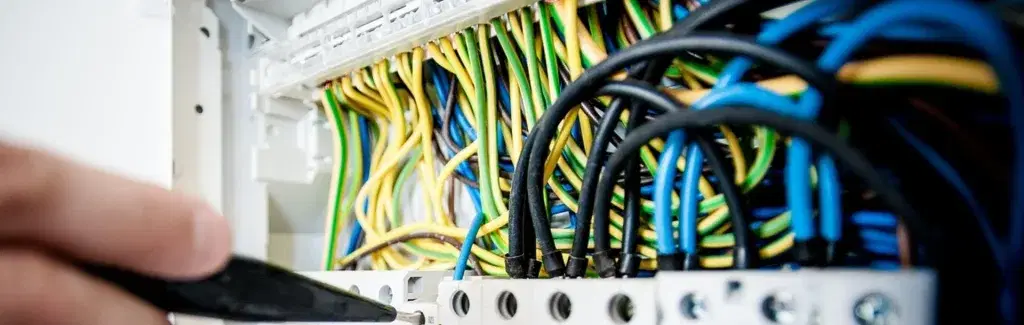
Understanding UK electrical wiring colours is essential for anyone working with electrical installations, maintenance, or inspection. Correctly identifying wiring colours helps ensure safety, compliance with UK regulations, and accurate electrical testing.
In the UK, the line conductor is brown, carrying electrical current from the power source to appliances and equipment. Because this conductor is live, it is one of the most dangerous wires to handle. Knowing how to identify each conductor by colour is therefore vital for electricians, engineers, maintenance teams, and anyone working near electrical systems.
This guide explains the current UK wiring colour standards, how they compare to older systems, and what professionals need to know when working with modern and legacy electrical installations.
Current UK Electrical Wiring Colours (Post-2006)
Since 2006, UK electrical wiring colours have been harmonised with European standards under BS 7671 (IET Wiring Regulations).
If your property or installation has been wired or updated since 2006, you will typically see the following conductor colours:
- Line (Brown) – The live conductor delivering electrical current to the circuit.
- Neutral (Blue) – Returns electrical current to the source, completing the circuit.
- CPC / Earth (Green & Yellow Stripes) – A protective conductor that diverts fault current to earth, reducing the risk of electric shock.
These colours apply primarily to single-phase domestic installations and most modern commercial systems.
Old vs New UK Wiring Colours
Many older UK properties still contain wiring installed before the harmonised colour change. Recognising the difference between old and new UK wiring colours is critical when inspecting or modifying electrical systems.
| Function | Old Colour (Pre-2004) | New Colour (Post-2006) |
| Line | Red | Brown |
| Neutral | Black | Blue |
| CPC (Earth) | Green (pre-1977) or Green/Yellow | Green/Yellow |
Important safety note: Warning notice no longer recognised – deleted from BS 7671 and no longer to be used.) Never assume a conductor’s function based on colour alone; always test with a voltage meter.
Three-Phase Systems (Industrial & Commercial)
For larger installations or industrial equipment, three-phase wiring uses additional colours for the different phases:
- L1: Brown
- L2: Black
- L3: Grey
- Neutral: Blue
- CPC / Earth: Green/Yellow
These colour codes help electricians clearly identify phases in more complex installations.
Compliance & Fixed Wire Testing (Periodic inspection and testing)
If you manage a business or public building, regular Fixed Wire Testing—resulting in the issue of an Electrical Installation Condition Report (EICR)—is a legal obligation within the Electricity at Work Regulations 1989.
Why Electrical Testing Matters
- Safety: Identifies deterioration, damage, or dangerous DIY errors.
- Compliance: Ensures installations meet BS 7671 Wiring Regulations currently in its 18th Edition.
- Risk management: Helps prevent fire hazards, electric shock, and operational disruption.
Typical Inspection Frequencies
- Commercial offices: Every 5 years
- Industrial environments: Every 3 years
- Special environments (e.g. pools or gyms): Annually
Essential Electrical Safety Tips
Anyone working near electrical systems should follow these key safety practices:
- Isolate Power: Always turn off the electricity at the main consumer unit before touching any conductors or associated conductive parts.
- Use Insulated Tools: Only use tools rated for electrical work.
- Identify Mixed Wiring: If you see red/black and brown/blue wires together, proceed with extreme caution.
- Hire a qualified electrician: If you are unsure about electrical work, hire a qualified electrician.
Professionals seeking to develop their knowledge should also consider recognised electrical qualifications such as 18th Edition (City & Guilds 2382) training.
UK Electrical Wiring Colour Reference (2026)
The following table summarises modern and historical UK electrical wiring colours for both domestic and industrial installations.
| Wire Function | Modern Colour (Post-2006) | Old Colour (Pre-2004) | Safety Note |
| Line (Single Phase) | Brown | Red | Carries live current |
| Neutral | Blue | Black | Completes circuit |
| CPC / Earth | Green/Yellow | Green | Protects against electric shock |
| Line Phase 1 | Brown | Red | Three-phase systems |
| Line Phase 2 | Black | Yellow | Three-phase systems |
| Line Phase 3 | Grey | Blue | Three-phase systems |
Critical Safety Checks for 2026
- Isolation: Before inspecting wiring, ensure the circuit is isolated and “locked out” to prevent accidental reconnection, and fully complete safe isolation procedures.
- Testing: Never rely solely on colour. In 2026, many older properties have been DIY-modified. Use a calibrated voltage tester to verify that a conductor is dead/de-energised before touching it.
- Periodic inspection and testing requirements: As of 2026, most commercial landlords must have a valid Electrical Installation Condition Report (EICR). Using the incorrect conductor colours may result in a “C3” (Improvement Recommended) or “C2” (Potentially Dangerous) code on your report, resulting in it being deemed UNSATISFACTORY if it results in danger.
Why Some High-Voltage UK Substations Use Older Wiring Colours
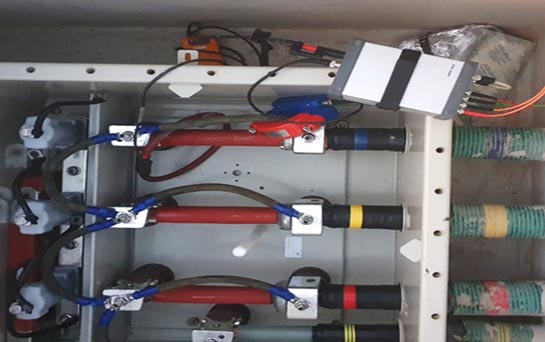
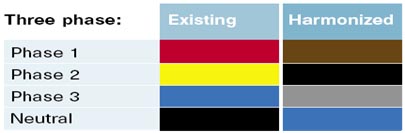
Although most installations now follow BS 7671 wiring colours, UK high voltage (HV) substations often continue to use “old” wiring colours – specifically Red, Yellow, and Blue for phases; this primarily is because they comply with different regulatory standards than domestic or standard commercial buildings.
1. Distinct Regulatory Standards
While most UK electrical installations follow BS 7671 (the IET Wiring Regulations), high voltage utility substations often operate under different engineering standards, such as those set by the Energy Networks Association (ENA) or National Grid.
- BS 7671 Harmonisation: In 2004, the UK moved to harmonised European colours (Brown, Black, Grey) for low voltage (LV) systems to align with IEC 60446.
- Exemption: Utility networks (transmission and distribution) are frequently exempt from parts of BS 7671, allowing them to maintain legacy standards that prioritise internal network consistency over domestic harmonisation.
2. Safety and “Inherited” Consistency
The primary reason for retaining legacy colours is operational safety.
- Avoiding Confusion: Mixing new (Brown/Black/Grey) and old (Red/Yellow/Blue) colours within a single complex HV site significantly increases the risk of misidentification by engineers.
- Legacy Infrastructure: Many substations contain equipment decades old. To ensure that an engineer in 2026 can safely trace a circuit across various bays, the original Red/Yellow/Blue convention is often maintained for consistency throughout the site’s lifespan.
3. Primary Phase Identification
In many high-voltage contexts, “colour” is less about the conductor’s insulation and more about secondary wiring and busbar marking.
- Busbars: Large copper or aluminium conductors in substations are still frequently painted or taped with Red, Yellow, and Blue to denote Phases 1, 2, and 3.
- Secondary Wiring: Control and protection circuits (CT/VT wiring) often stick to these traditional colours because they match existing schematics used by specialised high-voltage technicians.
Summary of Phase Colours
Frequently Asked Questions
Q: Is the line conductor always brown in the UK?
A: In modern domestic UK wiring, yes. However, in older homes, it may be red, and in three-phase systems, it could be black or grey.
Q: Why were the colours changed?
A:To align with the International Electrotechnical Commission (IEC) standards, making it safer for electricians working across different European borders.
Q: What happens if line and neutral are reversed?
A:This is known as “polarity reversal.” It can cause appliances to remain “live” even when switched off, posing a severe shock risk and potential fire hazard.